December 2025
Books may be the only material objects that bring me bliss and blessings – perhaps art and trees come a close second. My reading was modestly more focused this year around a few themes: Von Neumann, the Enlightenment, fractals, agentic systems, and fiction with spare prose. When I reflect on how ordered and structured my life is with its routines and responsibilities, I’m glad that the books I read are one of the few areas of wildness and entropy, the pathways to other worlds far different from my own.
AI papers again dominated and despoiled my attention. One survey paper even made my “best of the year” picks. 2025 was another golden year in AI research as reasoning and agentic systems deepened. We saw the first good papers on continual learning and recursive self-improvement (the first, momentous steps). While many wonder about what a drive to AGI or a singularity may look like, I think the most striking, upcoming moment in human history will be “First Contact”, after memory scaling and identity formation get built into autonomous agents. We will then realize we have birthed a new alien species and will have to meet it on uncertain terms.
I’ve been working with some alignment researchers, flourishing experts, and founders to sketch out and help build up the field of “positive alignment“, which will consider how to make AI systems understand and promote human flourishing for individuals, communities, societies, and overlapping ecological systems on earth.
Finally, Jake Kraft and I have been interviewing some wonderfully variant people about their outlier views and worldviews, as part of our Variance Podcast. Don’t expect many episodes each year, as our goal is to create prickly, archival recordings that you’ll want to revisit over time. If you want to follow this and my other posts, check out Hash Collision.
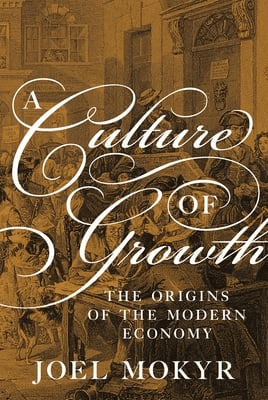
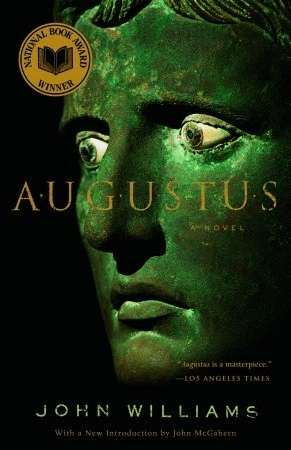
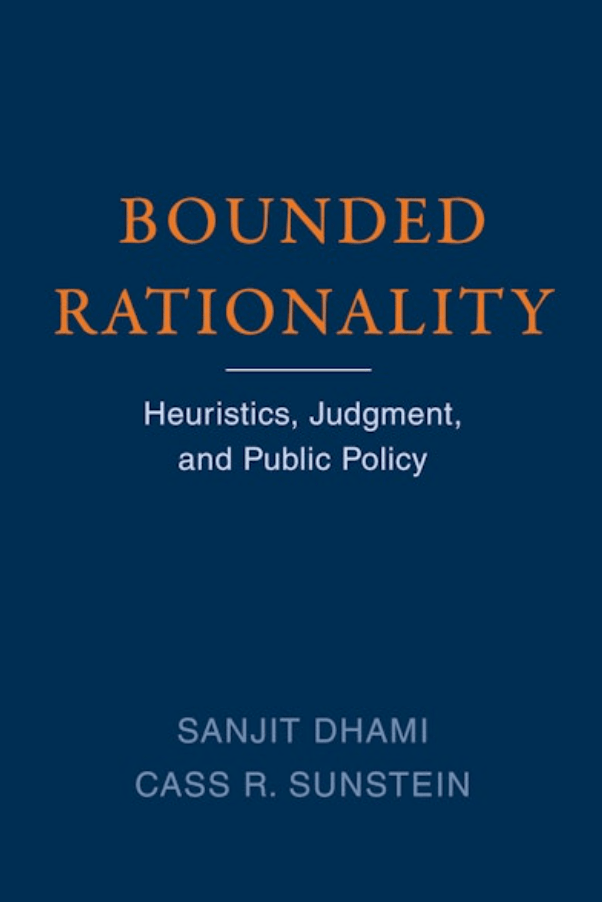
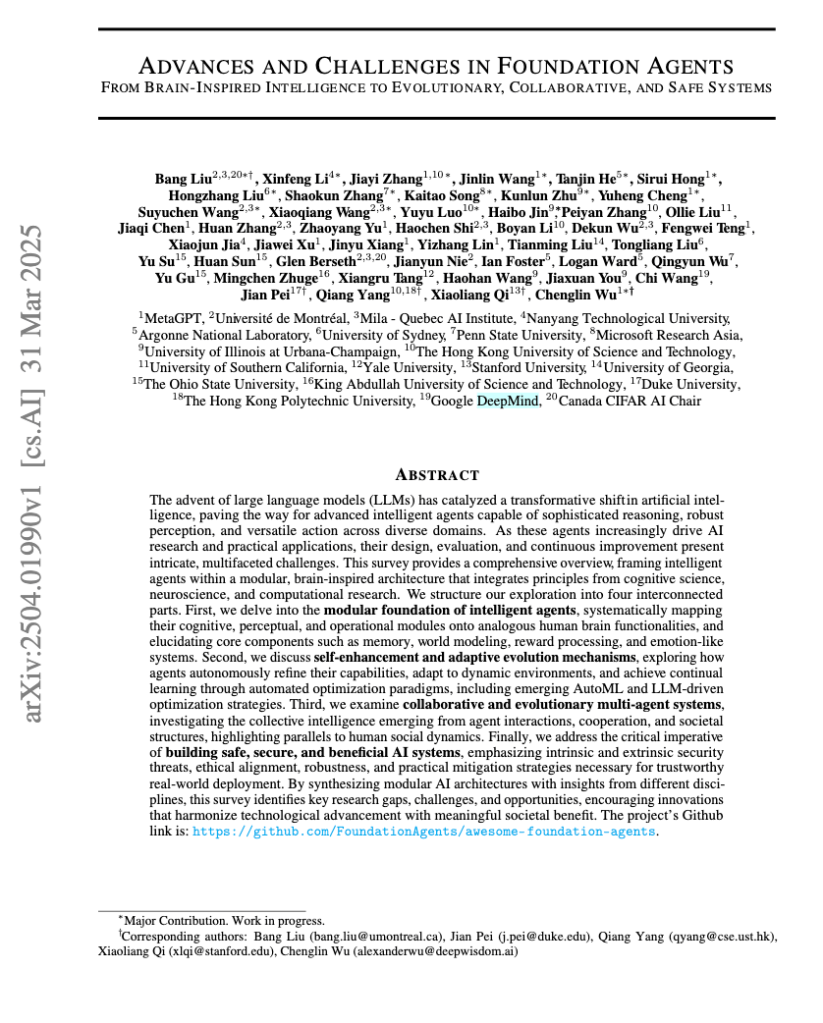
I had a five-way tie for the best books this year: Mokyr’s A Culture of Growth on how societies build or block the conditions for sustained progress; John Williams’ masterpiece Augustus, and the runner-up, Stoner, as intimate studies of character under the slow pressure of duty and power; Dhami and Sunstein’s Bounded Rationality as the clearest bridge from “humans are cognitively weird” to “policy should be designed accordingly”; Liu et al.’s Advances and Challenges in Foundation Agents as a big-map survey of how modern agents stitch together memory, planning, tools, and safety constraints into something that actually acts in the world, and; von Neumann’s core computing writings (Compendium, EDVAC, Self-reproducing Automata, and The Computer and the Brain) arguing that computation is best understood as a class of automata with robustness coming from adaptation and distributed memory.
After the best books, I continue with my full reading trace and then my short section about my favorite technical papers, audio and video, broadening from books to culture (hat tip to Piero Scaruffi and Tyler Cowen, who both make great year-end lists).
___________________________________
BEST BOOKS OF 2025
Mokyr, A Culture of Growth: The Origins of the Modern Economy. What led from the Enlightenment and Republic of Letters to modern growth; less a tech miracle than a social permission structure for ideas, a borderless group of intellectuals pushing their views on science, liberalism, and progress.
Williams, Augustus. One of the few perfect novels I’ve read. It covers Late Republican and Early Imperial Rome told through letters, documents, and voices; an intimate and painful view of power and sacrifice. Many of the literati prefer Williams’ other book, Stoner, a devastatingly quiet novel about an ordinary academic life and how “small” choices become your whole fate (it’s good, but Augustus is perfect).
Dhami and Sunstein, Bounded Rationality: Heuristics, Judgment, and Public Policy. A rigorous overview of the standard view of Bayesian rationality and ultimately the limits of cognition and rationality, from humans to silicon agents, through the viewpoint of behavioral economics, institutions, and other constructs of decision science.
Liu et al, Advances and Challenges in Foundation Agents [2025]. Probably my single favorite AI paper of the year. It’s a systematic survey of foundation agents and the hundreds of papers on the primitives needed to get to AGI (cognition, memory, world models, rewards, emotion modeling, perception, action systems, self evolution, scientific discovery, collaborative multi-agent systems, collective intelligence and adaptation, intrinsic safety, superalignment). This paper is the length of a book but is worth a read.
von Neumann, The Neumann Compendium; First Draft of a Report on EDVAC; Theory of Self-Reproducing Automata; The Computer and the Brain. I was sidetracked from reading Herbert Simon to explore many of Von Neumann’s papers, books, and speeches. JvN deserves his reputation – he may even outshine Turing and Shannon in the long run, working his way toward Gauss and Euler. The Compendium is a good place to start, and it has Ulam’s homage to his best friend (I skipped JvN’s work on Quantum Mechanics as I still struggle with basic modern accounts, let alone his older versions of it). JvN opines that computing needs to be both serial and parallel, digital and analog – to maximize the bounds of what can be computed and parallel nature. He posits that all computing is a subset of the class of automata, all math can be reduced to computing, and that logical neurons are a likely substrate for computers. Finally, he discusses how reorganization and adaptation capability are key, along with distributed, non-localized memory, which he sees as increasing survival and robustness. I would recommend complementing the books above with MacRae’s biography of Von Neumann, his brother’s memoirs, and the wonderful Labutat novel about Von Neumann called “Maniac” (which is near-perfect but flawed by starting with poor Paul Ehrenfest and not Leibniz, Boole, Babbage, Lovelace, Jacquard, or Turing). Finally, the one part of JvN’s work that still scares computer scientists but will be crucial to create material abundance and accelerate space exploration and colonization will be the kinematic self-reproducing machines he describes in what may be his most important work.

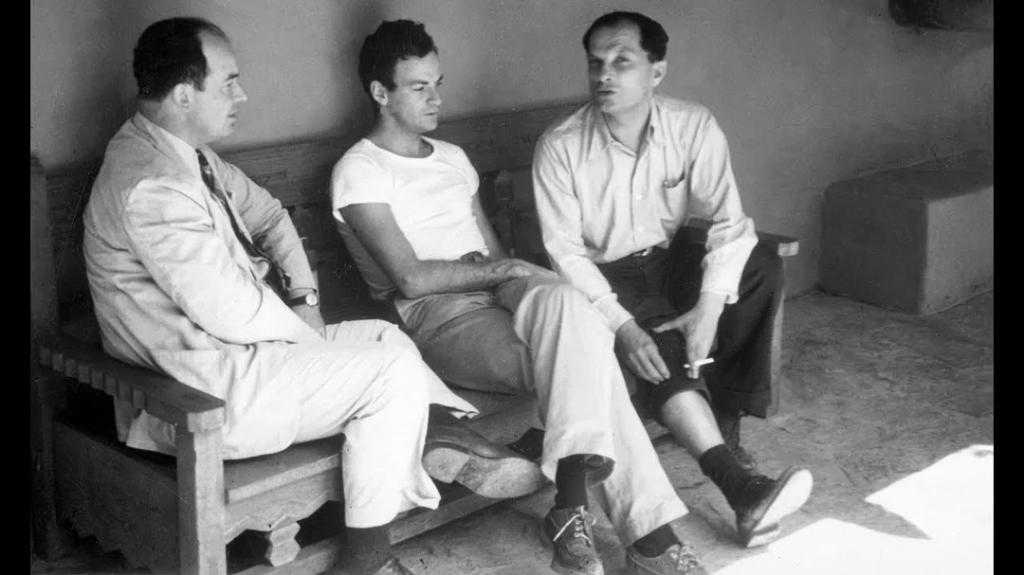
Von Neumann, Feynman, and Ulam on a bench [1949]. Three of the brilliant minds of the 20th century are relaxing at Los Alamos (specifically at the Bandelier National Monument Lodge) during the post-Manhattan Project era. The inventor of the modern computer architecture, replicators, and game theory in a natty white suit; the discover of QED and one proposer of nanotech and quantum computers, sitting like a hobo; and the creator of Monte Carlo methods, cellular automata, nuclear pulse propulsion, and the Ulam-Teller death device to end humanity. Photograph by Charles A. Lehman. Courtesy of Los Alamos National Laboratory and AIP Emilio Segrè Visual Archives.
___________________________________
NON-FICTION
Close, Elusive: How Peter Higgs Solved the Mystery of Mass. A detailed chase story of the Higgs boson, how a ghostly idea became a particle you can actually bump into.
Nasaw, The Chief: The Life of William Randolph Hearst. A damningly honest portrait of Hearst and media power as a machine for shaping reality; it covers his foibles and lovers well.
Pistor, The Code of Capital. How law quietly turns assets into wealth, capitalism’s “source code,” written by lawyers.
Garton Ash, Free Speech: Ten Principles for a Connected World. A practical manifesto for speaking freely without burning the whole village down.
Ball, Universe of Stone: A Biography of Chartres Cathedral. Chartres as a living system, geometry, politics, faith, and craft fused into stone. One of my favorite places to visit and contemplate.
Hughes, American Genesis: A Century of Invention and Technological Enthusiasm, 1870–1970. A big-history tour of America’s invention engine, how research and industrial labs built the modern American economy.
Chafkin, The Contrarian: Peter Thiel and Silicon Valley’s Pursuit of Power. Thiel as a case study in Silicon Valley ideology: ambition, heresy, and political gravity. It had an axe to grind, but if you ignore the commentary, the factual bits are noteworthy.
Stupple, The Sovereign Child. A provocative rethink of childhood as an emerging locus of rights, agency, and power (I don’t fully agree, but plenty to chew on).
Lambeth, The Transformation of American Air Power. How doctrine, tech, and bureaucracy rewired what “air power” even meant (and I suspect drones are changing this again).
Taylor, Orwell: The Life. Orwell without the saint-candle: a messy and often annoying human with a sharp mind and many hypocracies. The Etonian who went on to become a busboy.
Pink, When: The Scientific Secrets of Perfect Timing. A timing manual for humans and why when you act often beats what you do.
Johnson, Strange Beauty: Murray Gell-Mann and the Revolution in Physics. Gell-Mann’s life as a tour of quarks, complexity, and scientific ego.
Antognazza, Leibniz: An Intellectual Biography. Leibniz as a one-person machine: metaphysics, math, and manic productivity. I found that much of what he worked on was silly (the dynastic histories, the failed mining experiments), and I am even conflicted about his philosophical legacy. Still, his creation of an early computer, binary mathematics, and calculus makes him one of the greats.
Hoffman, Superagency. A techno-optimist brief: build ‘private commons’ and institutions that make AI amplify human agency.
Harding, The Brainy Bunch: The Harding Family’s Method to College, Money, and Success. A family-driven playbook on education, ambition, and climbing ladders early toward your own path.
Wilson, Remarkable Mathematicians: From Euler to von Neumann. A gallery of mathematical minds and their quirky and often tragic lives.
Nurse, What Is Life? Five Great Ideas in Biology. A compact map of biology’s core ideas, from cells to evolution, drawn by a working scientist.
Greenfield, You and me: The Neuroscience of Identity. What is it, why do humans and some animals have it, and what does it mean to design or build it for AI – what about experiences and memory make it possible?
Nordstrom, Scandinavia Since 1500. Five centuries of Nordic history, states, stories, and the slow craft of modernity. It’s a weird region and deserves more study.
Nevala-Lee, Inventor of the Future: The Visionary Life of Buckminster Fuller. Fuller was a brilliant systems-thinker and chaotic human with utopian designs; he was also quite often a crank and huckster.
Howe, The Penguin Book of Pirates. A swashbuckling anthology of real piracy, lawless marauding on the high seas. Pirates never get old.
Moss, The Woman Who Split the Atom: The Life of Lise Meitner. Lise Meitner’s overlooked brilliance, nuclear physics, exile, and moral courage, as teen fiction.
Storr, The Science of Storytelling. Why stories hijack our brains, and how to engineer that hijack on purpose.
Tifft and Jones, The Trust: The Private and Powerful Family Behind The New York Times. A dynastic history of the Ochs and Sulzbergers, journalism, influence, and family governance. Old Adolph was a brilliant entrepreneur, and his descendants just kept ruining his legacy.
Burnham, The Machiavellians: Defenders of Freedom. A bracing tour of power realism, why elites rule, even in democracies.
Partnoy, The Match King. Ivar Kreuger’s match-and-credit empire, financial genius, fraud, and global contagion. The SBF of his day.
Moravec, Robot: Mere Machine to Transcendent Mind. Classic futurism: robots as the next evolutionary substrate, with unsettling consequences. I’ve reread this book many times – the parts on Exes and fractal bush robots are worth a deep think.
Cervantes, Conquistadores: A New History. Conquest retold with gory detail: belief, violence, and improvisation colliding in the Americas with the world’s most violent and amoral men of their times. They were bastards and evil, but also helped create a new fusion civilization between many old ones and the Spanish New World.
Nowicki, Raising a Socially Successful Child. Social skills as learnable tech, practical coaching for empathy, cues, and friendship.
Olson, The Rise and Decline of Nations. Why some societies ossify: interest groups as slow-moving economic plaque.
Slingerland, Trying Not to Try. Ancient Chinese “effortless action” meets modern psychology, written by a scholar who has deeply studied wuwei.
Huning, America Against America. Called Xi’s brain, this is how the elite Chinese leadership sees the US – a Chinese political thinker’s field notes on America, with admiration, alarm, and diagnosis of its failure (a mixture of clear thinking and some misunderstanding).
Floud, The Cambridge Economic History of Modern Britain, Vol. 2. Britain’s modern economy in long view, industry, institutions, and the price of empire.
Isaacson, Elon Musk. A painfully honest biography of Musk’s vision, chaos, operating principles, and ambition. He’s already in the Julius Caesar and Napoleon territory, and when his AI space factories, humanoids, and missiles go live, Musk will get to Genghis Khan levels or whatever comes after that.
Kim, The NVIDIA Way. A business history of NVIDIA’s rise, strategy, culture, and the long game of GPUs. More financial and industry-driven.
Witt, The Thinking Machine. A narrative about how Jensen, an entrepreneurial genius, built NVIDIA to turn chips into a platform, and why that changed computing and perhaps human history.
Hagey, The Optimist. A portrait of Sam Altman and tech optimism as strategy and temperament; a positive view of OpenAI’s origin and history.
Hao, Empire of AI. The geopolitics and supply chains behind OpenAI; a critical narrative based on power, labor, and compute as empire (hence a bit ideological, and worth skipping the commentary for the facts and interviews). Best read with the Optimist, and together they get to what makes OpenAI special and also fragile.
Karp, The Technological Republic. A manifesto for state capacity from Palantir’s co-founder, peaking when he discusses the “Eck Swarm” and “Improvisational Startups”.
Wensberg, Land’s Polaroid. A meditation on Land and instant photography, innovation as impatience made physical.
Goldsmith, Obsessive Genius: The Inner World of Marie Curie. Curie as a relentless experimentalist; her science was powered by obsession, grief, and even poor decisions.
Norberg, Open: The Story of Human Progress. A data-forward case that openness beats tribal closure, that markets, ideas, and migration beat state control, ideology, and closed borders.
Wang, Breakneck: China’s Quest to Engineer the Future. A warning to both American and Chinese leadership about what both societies are missing and can learn from each other.
Schwartz, Berkeley 1900. A snapshot of Berkeley at the turn of the century; streets, institutions, and local oddities fossilized in print.
Campbell-Lange, John Lautner. A love letter to Lautner’s futuristic California homes, curves, concrete, and cinematic swagger.
Munari, Design as Art. A playful manifesto: it treats everyday objects as serious art experiments.
Gibson, Paper Belt on Fire. A sharp-edged memoir from the co-founder of the Thiel Fellowship and a VC fund to back dropouts; a fun read and write-up about alternative institutions to higher ed.
Carr, The Life of Sir Arthur Conan Doyle. Doyle as doctor, mystic, and maker of Holmes; surprisingly, he was ambivalent towards and even hated his greatest creation.
Outram, The Enlightenment. A compact book about the Enlightenment’s ideas, and the people arguing them into existence.
Spencer and Krauze, Introducing the Enlightenment: A Graphic Guide. A richly illustrated “visual Enlightenment” tour, ideas, artifacts, and the social world that carried them. Beautiful and edifying; made me feel like a teen again, in a good way, munching from a visual box of bon-bons
Lesser, You Say to Brick: The Life of Louis Kahn. Louis Kahn’s architecture as moral drama: light, ruin, and uncompromising form.
Cowen, Talent. An opinionated take on global excellence, how to spot, nurture, and not smother talent.
Williams, Shame and Necessity. Greek ethics as antidote to moral smugness, shame, luck, and what “responsibility” really buys.
Chung, Born of This Land: My Life Story. Hyundai’s founder on grit, poverty, and industrial-scale willpower. A force of nature.
Umāsvāti/Umāsvami, Tattvārtha Sūtra (That Which Is), trans. Nathmal Tatia. A doorway into Jain philosophy, ethics, karma, and reality as a disciplined map.
Dyczkowski, The Aphorisms of Śiva: The Śiva Sūtra with Bhāskara’s Commentary. Kashmir Shaivism in dense, cryptic aphorisms; consciousness as the center of it.
Fussell, The Great War and Modern Memory. How WWI rewired language and irony, modernity’s trauma written into literature by some unlucky soldiers in an unnecessary war.
Loewy, Never Leave Well Enough Alone: The Personal Record of an Industrial Designer. One of the great American designer’s memoirs about making Lucky Strike cigarette packaging, Greyhound bus design, and countless appliances.
Sunstein, The World According to Star Wars. A philosopher-lawyer reads Star Wars as civic myth: family, rebellion, temptation.
Kindleberger, A Financial History of Western Europe. A long-run map of money, banking, crises, and institutions, why Europe’s finance keeps inventing itself. Probably his magnum opus and an example of careful historical research.
Weinberg and McCann, Super Thinking: The Big Book of Mental Models. A toolkit of thinking shortcuts and mental models, inspired by Charlie Munger.
Budiansky, Journey to the Edge of Reason: The Life of Kurt Gödel. Gödel’s genius and paranoia intertwined; his logic, love letters, and a tragic mind that starved him.
MacAskill, Moral Uncertainty. An exploration of what to do when you’re not sure what’s right; ethics with epistemic uncertainty.
MacAskill, What We Owe the Future. Long-termism laid out: moral attention stretched across centuries.
Ritenour, The Mises Reader Unabridged. A curated deep dive into Mises, classical liberal economics in concentrated form.
Shone, The Nolan Variations. Christopher Nolan in his own words, obsessions, and tricks; it goes deep into the craft of his mind-bending cinema.
Klein and Thompson, Abundance. A politics-of-plenty argument: build faster and more housing, energy, infrastructure, and state capacity.
Schumpeter, Capitalism, Socialism and Democracy. The classic on creative destruction, and the uncomfortable question of what replaces capitalism.
Huang, The Rise and the Fall of the East. A thesis on East Asia’s growth model, what powered it, what’s brittle, and where it might crack.
Krishnamurti, Education and the Significance of Life. I’m not sure if reading his biography kind of poisoned his views for me, but I didn’t have much appetite for how he thought about education. I find that many statements in the book sound seductive and cool, but don’t actually mean much. He doesn’t give key details or even a coherent pedagogy like Montessori or Deutsch. He also keeps denigrating technical education, stuff like engineering and business or entrepreneurship, which bugs me. He was a poor Indian kid who was taken by some rich British and European aristocrats and had his entire life paid for by others, as a fabricated Theosophical messiah. He did terribly in school and with tutors, could never go to the university or make anything or sell services. His whole life was giving motivational talks, like a Tony Robbins for a dying empire.
MATH, SCIENCE & TECHNICAL
Carter, Visual Group Theory. Group theory that you can see, touch, and pull; symmetries, puzzles, and Cayley diagrams.
Wapner, The Pea and the Sun. The Banach–Tarski paradox as an intellectual thriller: chop a pea, get a sun.
Arianrhod, Vector. Vectors and tensors as cultural tech and history; mental constructs that changed physics and every part of your life, from every electrical device you own to the AI that is arising.
Valiant, Probably Approximately Correct. A grand theory of learning: what brains and algorithms can infer from limited evidence.
Villani, Birth of a Theorem. A mathematician’s lab notebook, ideas, doubt, caffeine, and eventual proof.
Tapp, Symmetry. Symmetry as a unifying language, from geometry to physics to group theory.
Newton, The Principia: Mathematical Principles of Natural Philosophy. The book that taught humans to see a mechanistic, scientifically-driven universe.
Lesmoir-Gordon et al., Fractals: A Graphic Guide. A visual on-ramp to fractals, self-similarity, chaos, and pattern as mathematics.
Frame and Urry, Fractal Worlds: Grown, Built, and Imagined. I suspect that fractals are much truer to nature than integers, reals, and irrationals. This book is a general reader deep-dive into some research and findings, after the fun graphic guide.
Roberts, Genius at Play. John Conway’s life in games and math, brilliance, whimsy, and sharp edges.
Havil, Curves for the Mathematically Curious. A cabinet of mathematical curiosities, cycloids, spirals, and curve lore.
Wallace, A History of Infinity. Infinity’s long argument, from Greek paradoxes to modern set theory, is presented by this bipolar novelist.
Carnot, Reflections on the Motive Power of Heat. Thermodynamics begins here: the logic of engines, efficiency, and entropy’s shadow. His core insight was that bringing very hot and very cold objects or volumes together would result in violent energy transfer. Order spreading to disorder is tied to the release of energy.
Margulis, What Is Life?. Life as planetary chemistry with opinions, cells, symbiosis, and the deep logic of living systems.
Schwichtenberg, Teach Yourself Physics. A self-study ramp into physics, concepts first, math as the aid. It’s been very useful as I design the AMP physics hypergraph.
Lambert, RLHF. A practical guide to reinforcement learning from human feedback, turning “good answers” into a training signal.
Stannard, Relativity. Einstein’s ideas made approachable, a decent primer into space-time and even gravity.
Einstein, Relativity: The Special and the General Theory. The original guided tour of spacetime is still remarkably readable (though he omits the vector calculus).
Maor, e: The Story of a Number. A transcendental number’s biography, calculus, complex numbers, and implications for our world.
Moriarty, Nanotechnology: A Very Short Introduction. Nano-scale reality, where surface forces rule and “materials” get weird.
FICTION, POETRY, SPEECHES, AND MEMOIR
Cole, Orphic Paris. A city-as-myth meditation, Paris as spell, archive, and hallucination.
Oliver, A Poetry Handbook. One of the recent great poets offers her take on the basics of poetry. Simple and yet not.
Labatut, The MANIAC. Science as thriller: brilliance, violence, and the moral weight of computation as it wants to be set free.
Watts, Blindsight. First contact with a crew of weirdos that punches you in the face: consciousness may be optional.
Taylor, We Are Legion (We Are Bob). Geeky, funny, space-von-Neumann probes and identity problems with starships.
Knowles, A Separate Peace. A quiet classic about envy and innocence, war as background noise.
Rowling, Harry Potter and the Sorcerer’s Stone. I’m late to the party and found it to be a fast and fun novel – not great art, but a nice yarn. I hope the later books get darker and more intricate.
Brown, Red Rising. Class war in space with Roman vibes, rage, revolution, and brutal pacing.
Stross, Accelerando. A techno-singularity sprint: posthuman economics at the speed of software. Kind of dull in many places, but a fun ending with the cat and the best fictional depiction of the run to the singularity.
Woodman, On Being an Angel. Lyrical, uncanny reflections on tenderness and transcendence.
Xianlin, The Cowshed. A scholar’s Cultural Revolution memoir, humiliation, survival, and stubborn dignity.
Pascal, Pensées (Édition de Guern). Fragmented brilliance: faith, doubt, and psychological insight in aphorism form. “Le coeur a ses raisons que la raison ne connait point.”
Thomas, Collected Poems. Incantatory lyric power, beauty, grief, and musical language at full tilt.
Mendelsohn, Ecstasy and Terror. Essays on beauty and dread, from classics to pop culture, with surgical taste.
Bush, Pieces of the Action. A scientist-administrator remembers building big science, WWII, policy, and invention.
Moss, Last Things. A tender, unsentimental graphic novel about love and decline, art history and mortality, and ultimately the evil of entropy and bodily decline.
Grothendieck, Récoltes et Semailles. A madly sane mathematician’s meditation on creativity, betrayal, and the cost of genius.
Diller, Who Knew. A showman’s memoir on media, money, taste, and the art of making people watch. Surprisingly shallow – the best parts were about the architecture he built.
Malone, Born to Be Wired. One of the great investor-operators, the original cable cowboy who was one of the great financial engineers – a wired-brain memoir of obsession and systems, life lived in high bandwidth.
Lewis, English Literature in the Sixteenth Century (Excluding Drama). Lewis the scholar, an Inkling expounding: a deep map of Renaissance prose and its intellectual weather.
Jorgenson, The Almanack of Naval Ravikant. Naval’s distilled philosophy on leverage, learning, and getting rich without losing your mind.
AI PAPERS
I read 120+ AI papers this year, partly professionally but mostly for the fun of it. It was another annus mirabilis for AI research, better than the prior year, suggesting we are still on an improving exponential for research and new models being released. We still don’t have a good AGI definition, despite the Hendrycks et al paper being an attempt at it.
I don’t have the time to leave a full trace of papers or summarize what I found notable about all the papers below, but these were the best of the batch that I read. I present them by theme.
Core Models and Architectures
Moonshot AI, Kimi K2: Open Agentic Intelligence [2025].
Fernando, Wanting to be Understood [2025].
Wang et al, Thoughts Are All Over the Place: On the Underthinking of o1-Like LLMs [2025].
Besta et al, Reasoning Language Models: A Blueprint [2025].
Abdin et al, Phi-4-reasoning Technical Report [2025].
Nvidia, Nemotron Nano V2 VL [2025].
Nvidia, Nemotron 3: Efficient and Open Intelligence [2025].
Lu et al, The AI Scientist: Towards Fully Automated Open-Ended Scientific Discovery [2024].
Lu et al, DeepDive: Advancing Deep Search Agents with Knowledge Graphs and Multi-Turn RL [2025].
Akiba et al, Evolutionary Optimization of Model Merging Recipes [2024].
Meyerson et al, Solving a Million-Step LLM Task with Zero Errors [2025].
McMillen and Levin, Bio-inspired AI: Integrating Biological Complexity into Artificial Intelligence [2024].
Belcak, Small Language Models are the Future of Agentic AI [2025].
Wang et al, Hierarchical Reasoning Model [2025].
Hillier et al, Less is More: Recursive Reasoning with Tiny Networks [2025].
Rodionov et al, Hogwild! Inference: Parallel LLM Generation via Concurrent Attention [2025].
Zhao et al, Sample, Scrutinize and Scale: Effective Inference-Time Search by Scaling Verification [2025].
Muennighoff et al, s1: Simple test-time scaling [2025].
Wang et al, 1000 Layer Networks for Self-Supervised RL: Scaling Depth Can Enable New Goal-Reaching Capabilities [2025].
Jiang et al, Artificial Hivemind: The Open-Ended Homogeneity of Language Models (and Beyond) [2025].
Yue et al, Does RL Really Incentivize Reasoning Capacity in LLMs Beyond the Base Model? [2024].
Continual Learning / RSI
Gao et al, A Survey of Self-Evolving Agents: On the Path to Artificial Super Intelligence [2025].
Maiti et al, Souper-Model: How Simple Arithmetic Unlocks State-of-the-Art LLM Performance [2025].
Pan et al, Can Past Experience Help LLMs Reason Faster? [2025].
Behrouz et al, Nested Learning: The Illusion of Deep Learning Architectures [2025].
Silver and Sutton, Welcome to the Era of Experience [2024].
Novikov et al, AlphaEvolve: A Gemini-powered coding agent for designing advanced algorithms [2024].
Gundlach et al, On the Origin of Algorithmic Progress in AI [2025].
Agents
Liu et al, Advances and Challenges in Foundation Agents [2025].
Vallinder and Hughes, Cultural Evolution of Cooperation among LLM Agents [2025].
Jiang et al, Adaptation of Agentic AI [2025].
SIMA Team, SIMA 2: A Generalist Embodied Agent for Virtual Worlds [2025].
Yao et al, ReAct: Synergizing Reasoning and Acting in Language Models [2022].
Su et al, ToolOrchestra: Elevating Intelligence via Efficient Model and Tool Orchestration [2025].
Kuba et al, Language Self-Play For Data-Free Training [2025].
Kim et al, Towards a Science of Scaling Agent Systems [2025].
Wang et al, Voyager: An Open-Ended Embodied Agent with Large Language Models [2023].
Manning and Horton, General Social Agents [2025].
Benchmarks
Du et al, DeepResearch Bench: A Comprehensive Benchmark for Deep Research Agents [2025].
Chiu et al, MoReBench: Evaluating Procedural and Pluralistic Moral Reasoning in Language Models, More than Outcomes [2025].
Chiu et al, CulturalBench: a Robust, Diverse and Challenging Benchmark on Measuring the (Lack of) Cultural Knowledge of LLMs [2024].
Qin et al, OSGym: Super-Scalable Distributed Data Engine for Generalizable Computer Agents [2025].
Zou et al, EIFBench: Evaluation for Institutional and Formal Rules [2025].
Tian et al, Overconfidence in LLM-as-a-Judge: Diagnosis and Confidence-Driven Solution [2025].
Shen et al, Satori: Reinforcement Learning with Chain-of-Action-Thought [2025].
Hendrycks et al, Remote Labor Index (RLI) [2025].
Guertler et al, TextArena [2025].
Patwardhan et al, GDPval: Evaluating AI Model Performance on Real-World Economically Valuable Tasks [2025].
Shang et al, Agent Rec Bench [2025].
Bock et al, TaxCalcBench: Can AI file your taxes? [2025].
Patel et al, Reasoning Models Ace the CFA Exams [2025].
Jackson et al, AA-Omniscience: Evaluating Cross-Domain Knowledge Reliability in Large Language Models [2025].
OpenAI, HealthBench: Advancing AI Evaluation in Healthcare [2025].
He et al, Defeating Nondeterminism in LLM Inference [2025].
He et al, LocalSearchBench: Benchmarking Agentic Search in Real-World Local Life Services [2025].
Alignment
Chen et al, Persona Vectors: Monitoring and Controlling Character Traits in Language Models [2025].
Ji et al, AI Alignment: A Comprehensive Survey [2024].
Leibo et al, A theory of appropriateness with applications to generative artificial intelligence [2024].
Leibo et al, Societal and technological progress as sewing an ever-growing, ever-changing, patchy, and polychrome quilt [2025].
Ji et al, Language Models Resist Alignment [2025].
Laukkonen, Contemplative Artificial Intelligence [2024].
Memory
Zhong et al, MemoryBank: Enhancing Large Language Models with Long-Term Memory [2023].
ReasoningBANK: A Benchmark for Evaluating Memory-based Reasoning [2025].
Mem0: The Memory Layer for Personalized AI [2025].
Zep: Long-term Memory for AI Agents [2025].
MemoryOS: A Framework for Personal Knowledge Operating Systems [2025].
MemoryLLM: Towards Self-Updating Large Language Models [2024].
WISE: Rethinking the Memory Mechanism of Large Language Models [2024].
Xin Luna Dong, Generations of Knowledge Graphs: The Crazy Ideas and the Business Impact [2023].
Balog and Kenter, Personal Knowledge Graphs: A Research Agenda [2019].
Controllable Recommendation with Large Language Models [2024].
Safety and Hardware
Pan et al, Frontier AI systems have surpassed the self-replicating red line [2024].
Ashutosh et al, LLMs can see and hear without any training [2025].
Kulveit et al, Gradual Disempowerment: Systemic Existential Risks from Incremental AI Development [2025].
Arcas, Towards a future space-based, highly scalable AI infrastructure system design (SunCatcher) [2024].
Waymo, EMMA: End-to-End Multimodal Model for Autonomous Driving [2024].
Other papers
Grimmelmann, Programming Languages and Law: A Research Agenda [2022].
Sawyer, US Antitrust Law and Policy in Historical Perspective [2025].
Moravec, Robot Bushes [1989].
Kriegman et al, Scale-invariant robot behavior with fractals [2024].
Spector et al, Google’s Hybrid Approach to Research [2012].
Wolfram, Untangling the Tale of Ada Lovelace [2015].
Wolfram, Computational Foundation of the Second Law of Thermodynamics [2023].
Freitas, A Self-Reproducing Interstellar Probe [1980].
Von Neumann, First Draft of a Report on the EDVAC [1945].
Chern, From Triangles to Manifolds [1979].
Chern, What is Geometry [1990].
Wheeler, Information, Physics, Quantum: The Search for Links [1989].
Thorne, John A. Wheeler (1911–2008), Biographical Memoir [2019]
Misner, Thorne, and Zurek, John Wheeler, Relativity, and Quantum Information [2009]
Shklar, The Liberalism of Fear [1989].
Popper, The Myth of the Framework [1994].
Thurston, On Proof and Progress in Mathematics [1994].
Metzler, Radical Technologies and How to Promote Them [2002].
Baer and Kidd, Learning with Certainty in Childhood [2022].
AUDIO AND VIDEO
I had some time for the video series, albums, podcasts, and playlists below (mixed among lots of junk Netflix and varied YouTube videos that I sampled). My tastes this year leaned toward sci-fi drama, arthouse movies and TV, contemporary classical music, and fast-talking East Coast or Texan intellectuals – so if that’s your cup of tea, enjoy what’s below.
Movies, TV, and Documentaries
Silverstein, Pantheon [2022]
Knight, Redemption [2013]
Apted, Moving the Mountain (Li Lu) [1994]
Takahata, Grave of the Fireflies [1988]
Nolan, Person of Interest [2011]
Eisenberg, A Real Pain [2024]
Park, No Other Choice [2025]
Laxe, Sirat [2025]
Schilinski, Sound of Falling [2025]
Bentley, Train Dreams [2025]
Badham, War Games [1983]
Anderson, The Phoenician Scheme [2025]
Soderbergh, Black Bag [2025]
Hawes, One Life [2023]
Lawrence, Ted Lasso (Season One) [2020]
Bennett, Day of the Jackal [2024]
Gilligan, Breaking Bad (Seasons One and Two) [2008]
Marks, Shogun [2024]
Classical Music
Tchaikovsky, Symphony No. 4 in F minor, Op. 36, Second movement [1878]
Glass, Complete Piano Etudes [1994]
Glass, Symphony #5, Act 7, Suffering [1999]
Glass, String Quartet No. 9, King Lear [2021]
Glass, Naqoyqatsi: Intensive Time [2002]
Richter, The Quality of Mercy [2004]
Nyman, The Morrow (from “Gattaca”) [1997]
Nyman, Memorial [1989]
Nyman, Time Lapse [1985]
Britell, Andante in C Minor (from “Succession”) [2018]
Steller, Every Living Breathing Moment [2021]
Silvestrov, Two Bagatelles: Bagatelle II [2002]
Sveinsson, The Last Farm 5 [2005]
Bach, Chaconne in D Minor, BWV 1004 [1720]
Phipps, Simple Harp Variation 1 and 2 [2017]
Purcell, When I Am Laid in Earth (Dido’s Lament) [1689]
McCreary, Violence and Variations (from “Battlestar Galactica”) [2010]
Townshend, Water Theme 1 and 2; Spirals [2012]
Podcasts
Conversations with Tyler, Podcast
O’Shaughnessy, Invest Like the Best
IN SUMMA
Reading is both very easy and extremely hard for me. It’s easy and natural to read for pleasure and information, but hard and painful to read critically, reject or probe other texts, or eveny syntopically connect it to the multiple areas I care abourt. Reading less, but better, is something I’m working on.
Essays and Aphorisms, Arthur Schopenhauer

Thoughts from Kurt Gödel’s notebooks, on his take against empiricism in favor of mathematical Platonism:
“In one of the many notebooks in which he recorded his philosophical aperçus, he wrote a list of his basic precepts which underscored how little his beliefs fit into the twentieth-century world of scientific empiricism, or for that matter the Age of Enlightenment altogether.
Like his philosophical hero Leibniz, he explained, “My theory is rationalistic, idealistic, optimistic, and theological,” committed to accessing the immaterial world of higher philosophical truths through the power of sheer abstract logical reasoning.
- The world is rational.
- Human reason can, in principle, be developed more highly (through certain techniques)
- There are systematic methods for the solution of all problems (also art, etc.)
- There are other worlds and rational beings, who are of the other and higher kind.
- The world in which we now live is not the only one in which we live or have lived.
- Incomparably more is knowable a priori than is currently known.
- The development of human thought since the Renaissance is thoroughly one-sided.
- Reason in mankind will be developed on every side.
- The formally correct is a science of reality.
- Materialism is false.
- The higher beings are connected to other beings by analogy, not by composition.
- Concepts have an objective existence (likewise mathematical theorems).
- There is a scientific (exact) philosophy (and theology) (this is also most fruitful for science), which deals with the concepts of the highest abstractness.
- Religions are for the most part bad, but not religion.”
Budiansky, Journey to the Edge of Reason: The Life of Kurt Gödel, p.242.
PAST LISTS
Best Books of 2024 (Loners and Fellowships)
Best Books of 2023 (Philosophers and an Intelligence Takeoff)
Best Books of 2022 (Lives and Machines)
 arun rao